What 104 matches revealed about football
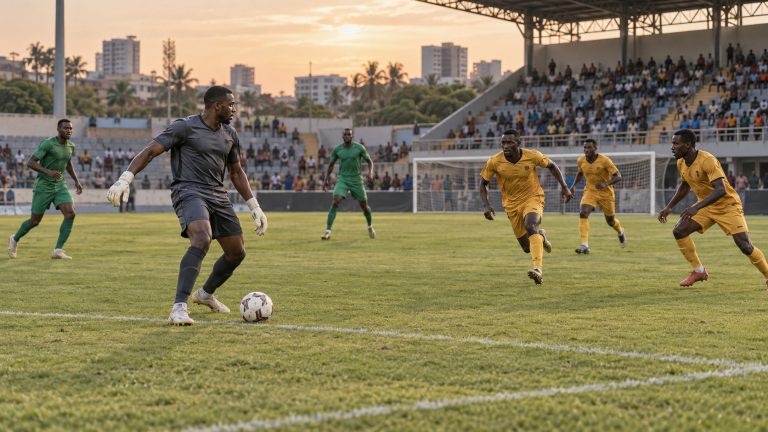
The ball goes loose near the box. Three players react, but not by running towards their own goal. One attacks the ball, another blocks the central pass and the third waits for a hurried clearance.
Scenes like this appeared throughout the 2026 World Cup. A supporter moving between match reports, tactical clips and an account reached through BizBet apk download could follow the score on a phone. The more revealing details needed another look.
FIFA’s review used video and tracking information from all 104 matches. That is enough football to distinguish a repeated pattern from one clever move on a good night.
Live markets react before the tactical picture is clear
Mobile betting markets respond quickly to goals, cards, substitutions and changes in the score. Tactical changes are harder to express immediately.
A team may control possession without creating clear chances because its opponent is comfortable in a compact block. Another side may have less of the ball but repeatedly escape the press with one forward pass. The possession figure alone does not describe either match correctly.
Live odds can move after a period of pressure, but the price represents the market at that moment rather than a tactical verdict. A short spell containing three corners may attract attention even when none produces a strong attempt on goal.
Match signal | Possible market reaction | Detail still worth checking |
Repeated high recoveries | Shorter price for the pressing side | Whether useful chances followed |
Rising possession | Greater expectation of a goal | Where the ball was held |
Defensive substitution | Change in late scoring markets | The role taken by the replacement |
Tired pressing line | More space expected in transition | Whether the opponent can exploit it |
Goalkeeper joining build-up | Longer possession sequences | Risk created by a failed pass |
The score and market price change in seconds. Identifying why the match has changed takes longer.
Defending deep was not a surrender
The tournament offered no simple answer to the high-press versus low-block debate.
Some teams defended close to the opposition goal. Others waited near their own penalty area and left little space between defence and midfield. Cabo Verde showed how the second approach could keep a match competitive. Their goalkeeper joined the passing phase after recoveries, creating another route out instead of leaving defenders to clear the ball without a target.
That did not make every low block effective. Ten players can remain behind the ball and still leave gaps.
Approach | Intended result | Common problem |
High press | Recover possession near goal | Space behind the defence |
Counter-press | Continue an attack after losing the ball | One player presses alone |
Mid-block | Close routes through midfield | Opponent circulates comfortably |
Low block | Protect the penalty area | No outlet after recovery |
Quick transition | Attack before the defence settles | Rushed first pass |
The label shows where players stand. It says less about what happens after they win possession.
Wingers did not remain on the wing
Pre-match formations retained familiar numbers: 4-3-3, 4-2-3-1 or three central defenders. Once the ball moved, those diagrams became less useful.
A winger starting beside the touchline could receive the next pass closer to the centre. The full-back then used the empty outside lane. In other attacks, the full-back moved inside while the winger remained wide.
For a defender, neither response is comfortable. Following the winger inside leaves the touchline open. Holding the outside position allows an attacker to receive between the lines.
Timing separated a rotation from a crowd. When the movement worked, one player left a zone as another entered it. When it failed, both arrived together.
A 4-3-3 could therefore show a back three during build-up, two players ahead of them and several attackers in the inside channels. It remained a 4-3-3 on the team sheet, but only briefly on the pitch.
Team news changes more than the starting line-up
These movements also explain why confirmed line-ups matter to pre-match betting markets. Replacing a winger with a slower player may affect the press, the width and the full-back’s role at the same time.
A missing goalkeeper can produce a similar chain reaction. If the replacement is less comfortable with the ball, central defenders may avoid short passes. That gives the opposition fewer opportunities to press near the box but may also result in more clearances and less controlled possession.
Before interpreting a price change, useful checks include:
- the confirmed starting eleven;
- the roles normally performed by the absent players;
- recent minutes played by likely pressing leaders;
- changes to the goalkeeper or central defence;
- whether several market prices moved at the same time.
One alteration can affect several tactical relationships. The player’s name is only the visible part.
Repeating the press carries a physical cost
Counter-pressing involves stops, turns and short sprints. These actions may add little to the total distance figure, yet repeating them late in a crowded schedule is difficult.
Several leading players entered the tournament after seasons containing more than 60 appearances. Travel and short gaps between fixtures also affected recovery.
This matters during in-play analysis. A pressing side that controlled the opening half may begin arriving a second late after the break. The score can remain level while the character of the match changes.
It would still be unsafe to assume that fatigue guarantees a late goal. The opposition must recognise the available space, pass through the first pressure and finish the move. Tactical opportunity is not the same as a certain outcome.
The next shift may be difficult to name
There is no new formation to copy from the review. The changes occur between familiar positions.
The revealing moments are the second after possession is lost, the winger’s movement when the full-back receives the ball and the goalkeeper’s position during build-up. Those details also give betting markets context that the score and possession totals cannot provide alone.
Clubs will borrow the ideas and adapt them to their squads. One team can press higher because its defenders are quick. Another may choose its moments because its replacements perform different roles.
The diagram before kick-off could look exactly as it did last year. The match beneath it may not.